
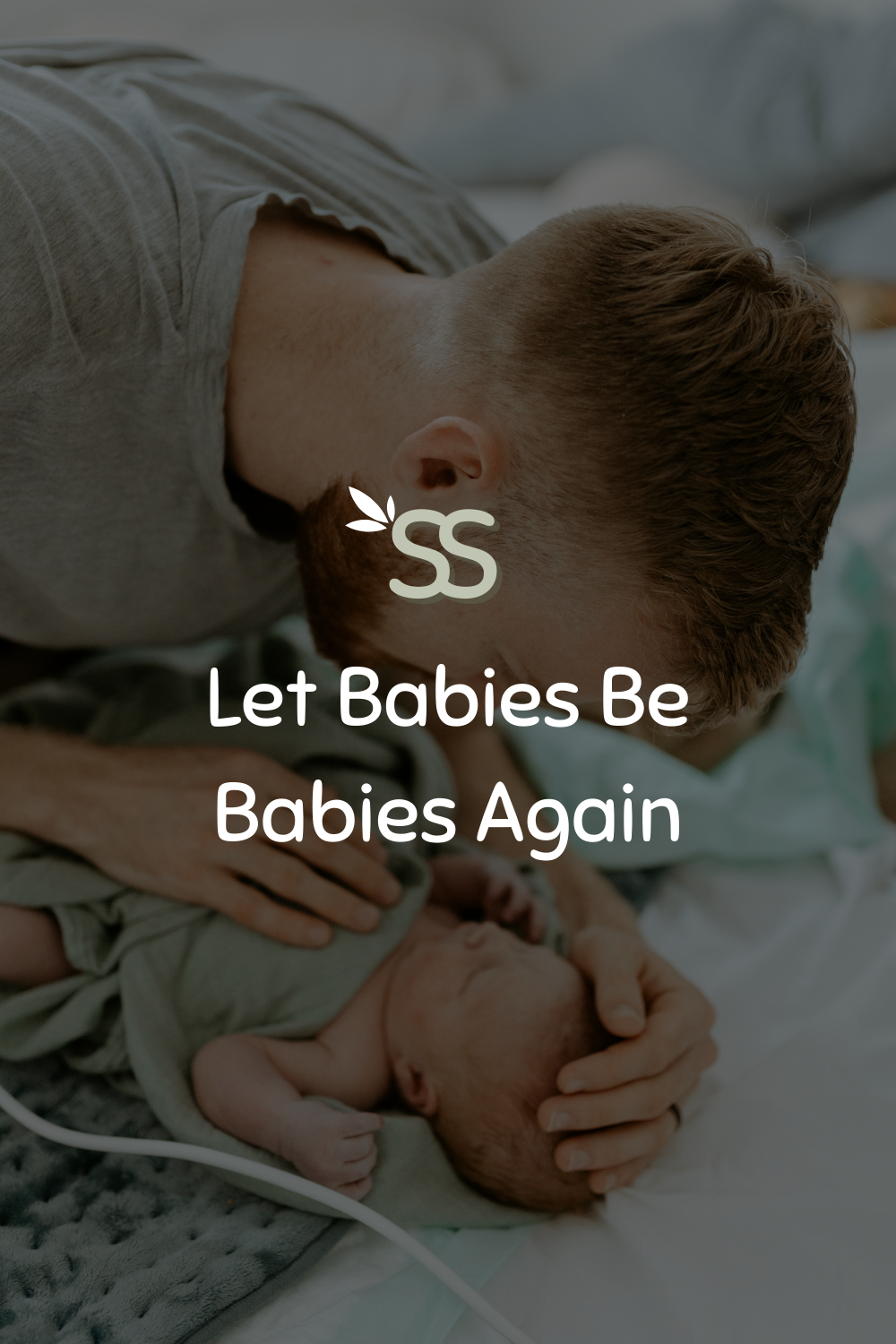
Let Babies Be Babies Again
Somewhere along the way, we started asking babies to grow up too fast.
To sleep longer.
To cry less.
To self-soothe (as if that’s even a thing).
To fit neatly into schedules, apps, and adult expectations.
And when they don’t? We wonder what we’re doing wrong.
But what if the problem isn’t our babies at all?
What if the real issue is that we’ve forgotten what babies are meant to be?
Babies Were Never Meant to Be Independent
Human babies are born more neurologically immature than almost any other mammal. This isn’t a design flaw.
Their brains are unfinished on purpose, shaped by connection, proximity, and responsive care. A baby who needs to be held, fed often, and soothed by a familiar body is not “dependent.”
They are developing.
Neuroscientist Dr. Greer Kirshenbaum reminds us that babies regulate their nervous systems through their caregivers. Calm doesn’t come from within at first. It’s borrowed.
That’s not a bad habit.
That’s biology and it’s called co-regulating (significantly important)!
Sleep Isn’t a Skill Babies Need to Learn
Somewhere along the way, we started treating sleep like a milestone to be achieved.
But sleep isn’t something babies need to be taught. You actually can’t teach it. It’s a biological function and it’s something that emerges as the brain matures.
Newborn sleep is light, protective, and fragmented by design. Night waking lowers SIDS risk. Frequent feeding supports growth and milk supply. Wanting to sleep close to a caregiver keeps babies safe.
When we expect babies to sleep like adults, we miss the point.
Babies wake because they’re supposed to!!
Crying Is Communication, Not a Problem to Fix
Crying isn’t manipulation.
It isn’t a failure.
It isn’t something to extinguish.
It’s a baby’s primary language.
Sometimes it means hunger, discomfort, overstimulation, the need to release stress or process a big transition.
And sometimes… it just means “I need you.”
When we rush to quiet babies instead of responding to them, we send the message that their communication is inconvenient.
But when we answer their cries with presence, we teach safety.
We’ve Pathologized Normal Baby Behavior
Short naps.
Contact sleeping.
Cluster feeding.
Needing movement to settle.
Waking often at night.
Crying during transitions.
These aren’t signs that something is wrong.
They are signs that a baby is doing exactly what babies have always done.
For most of human history, babies slept near adults, fed frequently, and were held for much of the day. There were no separate nurseries. No sleep trackers. No pressure to perform.
Letting Babies Be Babies Helps Parents Too
When we stop trying to “fix” normal baby behavior we stop watching the clock, stop bracing for the next wake-up, stop feeling like we’re behind.
That’s where our confidence as parents grows.
Rest becomes more attainable. Not because babies suddenly sleep through the night, but because parents stop fighting what their baby needs, pays attention to their unique cues, and let’s go of unrealistic expectations.
This is where we can have a massive positive impact on maternal and paternal mental health! You are not falling short, your expectations were just shaped by a culture who is asking ridiculous things from our babies.
This Doesn’t Mean You Have to Suffer
Letting babies be babies doesn’t mean ignoring your own needs.
It means finding biologically supportive ways to care for both of you.
It looks like:
learning how to rest in short stretches (Which your brain adapts to thrive on btw)
setting up safe sleep environments (Yes, even co-sleeping intentionally when done safely)
understanding nap rhythms without forcing them
supporting feeding and digestion
addressing body tension when needed
sharing the load when possible
redefining what “good sleep” really means in the early years
Support doesn’t come from pushing babies away.
It comes from supporting the system around them.
Your baby isn’t broken, and you’re not failing.
When we let babies be babies again, we give ourselves permission to be human too.
And that’s where rest begins.
If you want support that honors biology, attachment, and real life, you can explore:
✨ Connected Sleep Foundations
A gentle, evidence-based guide to newborn and infant sleep without sleep training.
✨ Bedsharing Basics
A warm introduction to safer bedsharing for families who want informed choice.
Because babies don’t need to be trained.
They need to be trusted.
